


The Storytelling Tree

Updated: Apr 9, 2025
A Short Story by Stacey Ruth
What you bury in silence becomes stone. What you tell becomes light. The tree remembers everything you cannot carry. And one day, you return, not to be rescued—but to remember you survived.

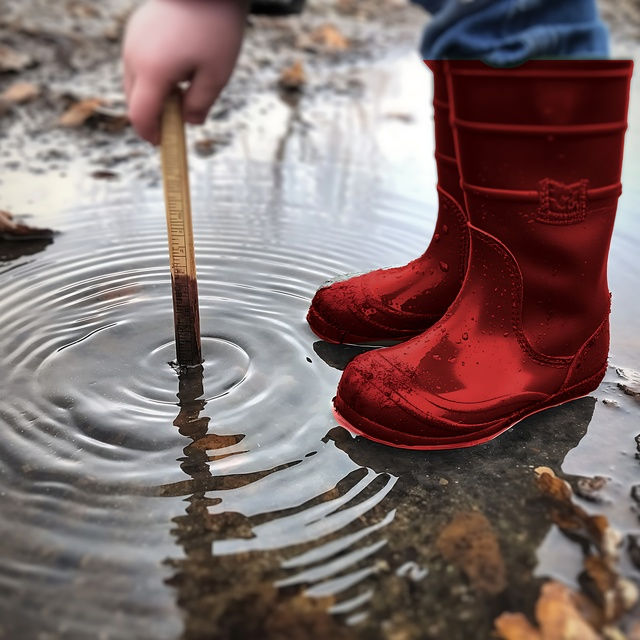
There once was a girl who wore red rain boots that were too big.
She knew the way down the crumbling nine-foot embankment, weaving her way along the exposed roots of the sprawling bur oak. The tree’s tendrils hung suspended from the sandy precipice, tangled with driftwood, the bones of plastic toys, and the cracked husks of Mapleleaf, Three-ridge, and Pimpleback Mussels—broken remnants of life which she exhumed, keeping one or two shells that were mostly whole and purple inside, instead of gray.
The purple ones were the best—rare and worth keeping.
Half-buried among the roots were discarded Coke bottles with faded labels, their glass dulled by time and the river. She didn’t touch those. Glass could trick you.
She climbed down to the water’s edge, where an iridescent, sticky foam clung to the shore and the heavy waves lapping in a passing barge’s wake. It was the sound of coming and going. The air was wet and heavy with the stink of dead fish. Still, it was not as awful as her parents’ more unpleasant conversation at the picnic table above her sight, beyond the tree.
She paused her treasure hunt to listen above the waves. The loud, angry, pleading, weeping voices of her parents had turned to silence.Which meant the talking had stopped or she had outrun it.
She crouched in the sand once more, sorting through her mussel shells. Deciding which ones held the most magic.
She never waded out further than a few inches into the water in her search for shells in her too big boots. She didn’t believe the stories of catfish big as rowboats that lived under bridges and barges. But the water was dark and thick, and things lived in it—things she couldn’t see. And things died in it. That was enough.
The girl understood much. Not because she wanted to, but because it was impossible not to.
She understood the way her mother’s voice disappeared when her father was angry, how Mother folded herself smaller and told the girl to be good. She understood that people who made the messes were rarely the ones who cleaned them up.
She understood how to make oneself disappear if you could climb under a table without anyone seeing you there, and hold your breath for a long, long time. Or to climb inside a book until the daylight faded and the shadows were longer than the bedroom walls.
She saw, and she understood.
But there were other things she didn’t understand. She asked questions about them, mostly of her mother, when they were alone.Real questions.Quiet ones.
Why do you say “It’s nothing” when it looks like something?
Why do we keep pretending we’re not sad?
Why don’t we talk at dinner?
Why do I feel bad when I didn’t do anything wrong?
And her mother would sigh—a soft thing, almost nothing—before smoothing her daughter’s hair and saying, “You ask a lot of questions.”
The girl had expected something more. Or different. She didn’t know. But not that flicker of sadness in her mother’s eyes. She hadn’t meant to cause it. She only wanted the truth.
But truth was not what most people wanted. It made them sigh and disappear into themselves where the girl couldn’t reach them.
That didn’t happen in stories.
Stories didn’t hide to make people feel better. They didn’t soften the bad parts or tuck them behind polite words. They let terrible things happen. But those things happened for a reason—a curse, a promise, a spell broken too late. The bad things in stories made sense.
The stories she read didn’t pretend people were kind.
Fathers bargained away their daughters, like in The Girl Without Hands, where a man cut off his own child’s hands to make a deal with the devil. In The Robber Bridegroom, men lured women into the forest and ate them. Kings locked princesses in towers. Husbands murdered brides. Brothers turned jealous and bitter and cursed their sisters for a hundred years.
The wicked were punished, or they weren’t. The lost were found, or they weren’t. It didn’t matter if you were good. Being good had nothing to do with it at all.
But magic did.
Magic was the only thing that could break the rules. It was the only thing bigger than men with sharp voices and heavy hands. Bigger than lies that curled like smoke and slipped into everything.
She knew magic was real. It had to be. Without it, hope died.
It was in the tree—the way its roots held tight to the sandy hill, thick and steady, keeping the world from falling apart. It was in the river—deep and dark and full of hunger, a thing that could take and take and still never be satisfied. It was in the wind—the way it moved through the leaves, speaking in a language her ears couldn’t understand, but her heart did.
It was in the way men swore the catfish were big enough to swallow a person whole—and no one could ever prove they weren’t.
Magic wasn’t the opposite of truth. It was what waited in the space between what could be explained and what couldn’t.
She was crouched at the river’s edge, her palms damp with sand, sorting through the shells she had collected. Two purple ones. One with a hole worn clean through. One that shimmered faintly in the light, like a dream remembered. Last she turned over one that was plain and gray, but smooth as bone. She kept it too.
The river lapped softly behind her, slow and wide and full of secrets. A barge groaned near the locks that lifted boats above the falls. The wind shifted with the sound of it.
Then came the voices—sharp and careless.
A man and a woman near the boat dock stumbled down the bank like they had forgotten how the ground worked—too loud, awkward, arms outstretched for balance, stepping over driftwood with plastic cups in their hands. Their feet crushed the river’s offerings of shells, stones, foam and wood. The woman’s sunglasses held her dark hair off her face, although the wind caught pieces of it anyway. Her eyes were rimmed in black, her legs long and bare in sandals that caught on debris at each step.
The man trailed just behind her. His shirt hung open, and a string around his neck held something small she couldn’t see. His hair was tied back like the girl’s curly ponytail, and his face disappeared behind the mirrored lens of his glasses. He said something low and laughed—soft and lazy. The woman smiled in return as they approached the girl.
“Hey Sweetheart,” the dark-haired woman said, bending slightly. “Are you alright down here?”
The girl didn’t move. She crouched on the sand, staring at the shells she had captured. The woman’s breath in the girl’s ear smelled sour.
“You shouldn’t be alone. Let’s find your parents,” the woman said. Her hand hovered in the air, waiting.
The girl fell back away from the woman, and scrambled toward the tree. She didn’t want to be found.
If the woman took her hand, it would be too late.
Her parents would punish her with their eyes because she had broken a rule. In fairytales, children who broke the rules were turned into birds with broken wings, donkeys sent to the far field, shadows stuck to walls, stones that couldn’t scream.
She ran.
“You don’t have to be afraid,” the woman said, scrambling after her—arms outstretched, smiling, always smiling.
The tree had been quiet until then. But now, its roots stirred beneath her. One root pressed against her boot. Another lifted near her knee. She climbed into its wooden arms without thinking.
The roots rose around her, thick and many, embracing her legs, her waist, her back. The rough bark turned warm—soft and smooth—and threaded itself across her like a braid, lifting her higher, higher, cradling her up over the bank.
Below, the woman shrieked. The girl shut her eyes and refused to look down.
The tree set her on the grass at its base, firm and steady in her big red boots. Then it stilled—once more a burr oak, quiet on the bank.
From far below, just carried on the wind, came the man’s voice: “Let her go.”
People were more dangerous than the river. Their depths were just as dark, but you couldn’t always see what was living there—or what had already died. The river had rules—currents, depths, undertow. It didn’t lie about what it was. But people smiled while hiding sharp edges. They were glass buried in sand—dull on the outside, but still sharp enough to cut. You couldn’t always see the danger until it was too late.
She turned toward her parents’ picnic table, boots slapping and squeaking as she walked.
The table sat in the sun, exactly where it had been—but something was different. The light was heavier here. The air had gone quiet.
Her father sat on the far side, turned just slightly, mouth open mid-sentence, as if he had meant to speak but hadn’t finished. His hand rested on the edge of the table, fingers curled around his pipe. His face was still, his eyes fixed somewhere beyond her, and the rest of him—his arms, his legs, his shirt with the pocket where he kept his pens—was a smooth gray stone.
So was the bench beneath him. So was the table.
Her mother sat beside him, one shoulder leaning slightly away his, her head bowed, one hand reaching behind her toward him—not clasped in his, not touching—just reaching, as if she'd been trying to bridge a space that never quite closed.
Her parents were now as they had always been: unmoving, unyielding, unreachable. They had become part of the table, part of the park, part of the stillness.
She had read about spells like this.
People turned to stone when they saw things they weren’t supposed to. Or when they said the wrong words, too many times, in the wrong way. Sometimes it was because they shouted. Or because they didn’t listen.
Sometimes it just happened when someone else wished hard enough.
In The Lion, the Witch and the Wardrobe, the witch had a wand that could freeze you in a blink. In The Snow Queen, the cold got into your heart first. Trolls turned to stone when the truth found them.
From the far edge of the field, a small voice rose. Bright. Familiar.
“Allison!”
She turned.
Children stood at the playground—watching her, waiting.
The park stretched wide beyond the picnic area, a rolling green expanse dotted with dandelions and clover, bees hovering low in the grass. The air smelled of fresh-cut grass and wild onion.
The playground itself sat in the full sun, the metal of the monkey bars warm to the touch, its paint flaking in places. The ground beneath the swings was packed dirt, worn smooth from years of kicking feet. The chains were slightly rusted, creaking loudly as they moved under the weight of children.
One swing was empty.
A little boy with skin the color of the river twisted in his seat of the other swing, his sneakers kicking up dust. His sister stood behind him, her hands pressed on his back, her hair tightly braided into bright plastic barrettes that clicked softly as she pushed him carefully.
A thin, white-haired boy hung from the top of the monkey bars, his knees locked over the highest rung. “Look! See?” he called to two girls below, who stood at the ladder, arms crossed. They saw, but they weren’t about to follow. Instead, they slid back down and raced each other to the slide.
Allison sat on the curved black seat, curling her fingers around the chains. She didn’t need anyone to push her.
She kicked forward, pumping her legs, letting the momentum build until she was soaring, flying high enough to see the tops of the cottonwoods, the brown sweep of the river beyond.
She leaned back into the sky, gripping the chains tightly, and let herself believe—for just a moment—that she was weightless, that she could slip into the air and never come back down.
The boy beside her twisted to watch. “I want to go as high as her! Push me! Push me!”
His sister hesitated.
The girl swept past them at the bottom of the arc. “Hi.”
"Hi," they said together.
As she swept past again, the girl said, “I’m Deirdre.”
As Allison pumped hard to go higher, her voice trailed, “That’s my mother’s name!”
“I’m Daniel,” said the boy, as he swung past her now.
Daniel was her uncle.
“My name’s Michael!” shouted the boy from the monkey bars.
“My daddy’s name is Michael,” Allison said softly now.
The two girls from the slide now stood, arm in arm just beyond the arc of her swing. As she rose, they told her, “We’re Esther and Betty. We are your grandmothers.”
As she dropped down in her arc, they opened their other arms as one person, “We have been waiting for you. You story is the one that sets us free.”
Allison let the swing slow. Dust puffed up under her boots as she came to a stop.
The children gathered around her, no longer laughing, no longer running. They stood in a quiet circle, and she felt no fear.
"We were turned to stone," Deirdre said. "All of us. When we got older."
"We said nothing for too long," Daniel added.
"Or too much of the wrong things," whispered Michael.
"We forgot our stories," Esther said. "Or hid them."
"But you still have yours," Betty said. "And if you give it to the tree, it will remember. It will keep it safe. Until you come back."
Allison looked toward the edge of the field. The great burr oak waited there, arms wide and unmoving.
"What if I forget it?" she asked.
"You won’t," said Ruth. "You’ll grow into it."
They walked together to the tree.
The roots opened for her again, soft and warm. She knelt at the base and placed her hands on the bark.
The other children stood behind her, silent.
"Once, there was a girl in red rain boots who wished with all her heart that her grown-up self would come and rescue her. Her grown-up self would be strong and kind and know how to smile and answer every question. She would take the girl by the hand, and they would run away together—quietly, while no one was watching. They would make a new home, just for the two of them. A place where they would tell each other endless stories. A place where she could play without hiding and magic was real."
The tree held still for a long time. Then a shimmer passed through its branches. A rustle echoed low in its trunk. The bark beneath her fingers warmed, pulsing once, faint and steady. The tree had heard her and was answering back. The bark shifted under her palms, rearranging itself in patterns where she felt the words tapping across her skin, and a music rising within her chest. A low glow shimmered where her hands had been, then sank deep into the trunk. The tree had taken her story. It had made a place for it.
Allison sat back on her heels. The children gathered close—not to ask anything of her, not to tell her what to do, but just to be near. They knew the weight of a story. And now, it wasn’t hers alone.
No one told her she was brave. No one said she was good.
For the first time she didn’t feel like she had to pretend anything at all.
___________________________________________________________________
Time has no loyalty to stories or their tellers.
Little girls grow up, and the fairy dust falls away from their red boots. They step into the mud, into what others call reality, but I know better. Reality is a fairy tale—one of the old ones, the sharp-edged kind, the kind where fathers cut off their daughters’ hands and men devour the women foolish enough to enter their forest.
The world is much the same. A place of angry fathers and mothers who love too much for their own good—or for the good of their children. And it eats us all alive, unless a hero comes to save us, slaying the villains with truth and grace.
We are told stories of brave knights, of heroes who fight monsters and win. But no one ever says the hardest battles are not in the stories. That the monsters don’t live in the dark—they live in daylight, in broken houses filled with loud voices, at dinner tables where silence spills like a poisoned feast, and there is no place to hide when they gnaw their way into our bones.
No one ever tells us that when the time comes—we are the ones who must pick up the sword.
So here I am.
I sit, swinging in the same creaky seat that once hung over a patch of worn dirt, where the chains groaned at the slightest weight of a child. I stare at the place where a giant burr oak once stood at the edge of the earth, its roots reaching for the river like grasping fingers, listening to the whispers of catfish big enough to swallow a man whole.
The tree is gone. No trace of it remains.
No hint of what wiped it from history.
Maybe the river swallowed it, pulling its roots free, dragging it down, down, down into the dark. Or maybe—more likely—it was the unforgiving hand of progress, the cold efficiency of a saw, the quiet removal of an “obstruction” to someone’s view of the water. A life was turned to stone.
The swing beside me creaks.
A small girl, in red rain boots, sits looking with me at the place where the tree once stood.
"You came back for me," she says.
I swallow. "You deserve it, precious girl. I would fight to the death for you. I’m sorry it took me so long."
She kicks her heels against the seat, tilting her head. "I knew you’d come one day.” She hangs still in the swing as she looks at me. "Is it time for a happily ever after?"
I don’t know the answer.
So I say, "Let’s try." I rise to see if I can find a magic shell along the sand.
___________________________________________________________________
Some day you will be old enough to start reading fairy tales again. - C.S. Lewis


Beautiful imagery in this haunting but hopeful tale! Keep on making magic 🤩